Monday, 11 December 2023
History of Mandawa
Mandawa is a small town located in the Shekhawati region of Rajasthan, India. The town is known for its beautiful havelis (traditional Indian mansions) adorned with intricate frescoes and paintings, which have earned it the nickname "Open-Air Art Gallery".
The history of Mandawa dates back to the 18th century when it was founded by Thakur Nawal Singh, a wealthy Rajput businessman. He built a fort and a palace in the town, which served as his residence. Over time, Mandawa grew into an important trading center on the Silk Route, connecting India with Central Asia.
The havelis in Mandawa were built by wealthy merchants and traders in the 19th and early 20th centuries. These havelis were decorated with intricate frescoes and paintings that depicted a range of themes, including religious motifs, mythological scenes, and everyday life. The artists who painted these murals were largely self-taught and came from different parts of India.
Mandawa is a popular tourist destination, attracting visitors from all over the world who come to admire the beautiful havelis and experience the rich cultural heritage of Rajasthan. Many of the havelis have been restored and converted into heritage hotels, offering visitors a chance to stay in these beautiful buildings and experience the grandeur of Rajasthan's rich past.
Thursday, 2 November 2017
Rani Sati Temple
Rani Sati Temple
is a temple located in Jhunjhunu, state of Rajasthan, India. It is the largest temple in India devoted to Rani Sati, a Rajasthani lady who lived sometime between the 13th and the 17th century and committed sati (self-immolation) on her husband's death. Various temples in Rajasthan and elsewhere are devoted to her worship and to commemorate her act. Rani Sati is also called Narayani Devi and referred to as Dadiji (grandmother).
Story
The story of Rani Sati Dadi Maa starts from the time of Mahabharata. Narayani's wish of being married to Abhimanyu and her desire to be sati in her next life.
As granted by Lord Krishna, in her next life she was born as the daughter of Gursamal in the village of Dokwa in Rajasthan and was named Narayani. Abhimanyu was born in Hissar as a son of Jaliram and named Tandhan Bansal. Tandan and Narayani got married and were leading a peaceful life. He was in possession of a beautiful horse which was being eyed by the son of king of Hissar for quite some time. Tandan refused to hand over his precious horse to the king’s son.
The king’s son then decides to forcefully acquire the horse and thus challenges Tandan to a duel. Tandan fights the battle bravely and kills the king’s son. The enraged king thus kills Tandan in front of Narayani in the battle. Narayani, symbolic of female bravery and power, fights with the king and kills him. She then commanded Ranaji (the caretaker of the horse) to make immediate arrangements for her to be set ablaze along with her husband’s cremation.
Ranaji, playing a vital role in fulfilling her wish to be sati with her husband, is then blessed by Narayani that his name will be taken and worshiped along with her name and since then she is known as Rani Sati.
officel wesite


is a temple located in Jhunjhunu, state of Rajasthan, India. It is the largest temple in India devoted to Rani Sati, a Rajasthani lady who lived sometime between the 13th and the 17th century and committed sati (self-immolation) on her husband's death. Various temples in Rajasthan and elsewhere are devoted to her worship and to commemorate her act. Rani Sati is also called Narayani Devi and referred to as Dadiji (grandmother).
Story
The story of Rani Sati Dadi Maa starts from the time of Mahabharata. Narayani's wish of being married to Abhimanyu and her desire to be sati in her next life.
As granted by Lord Krishna, in her next life she was born as the daughter of Gursamal in the village of Dokwa in Rajasthan and was named Narayani. Abhimanyu was born in Hissar as a son of Jaliram and named Tandhan Bansal. Tandan and Narayani got married and were leading a peaceful life. He was in possession of a beautiful horse which was being eyed by the son of king of Hissar for quite some time. Tandan refused to hand over his precious horse to the king’s son.
The king’s son then decides to forcefully acquire the horse and thus challenges Tandan to a duel. Tandan fights the battle bravely and kills the king’s son. The enraged king thus kills Tandan in front of Narayani in the battle. Narayani, symbolic of female bravery and power, fights with the king and kills him. She then commanded Ranaji (the caretaker of the horse) to make immediate arrangements for her to be set ablaze along with her husband’s cremation.
Ranaji, playing a vital role in fulfilling her wish to be sati with her husband, is then blessed by Narayani that his name will be taken and worshiped along with her name and since then she is known as Rani Sati.
officel wesite
Monday, 24 July 2017
Lohargal
Lohargal (लोहार्गल)
is a beautiful place of great tourist interest, situated in the Jhunjhunu District, Rajasthan. It is famous for its natural scenic beauty. Lohargal is 68 km from Jhunjhunu via Nawalgarh and Udaipurwati. It is situated at a distance of 10 km from Udaipurwati.
Lohargal has great historical importance – regarded as the place of Bhima, one of the heroes of the great epic of India – the Mahabharata. The holy shrine of Lohargal is situated at the foot hills of the Aravalli Ranges.
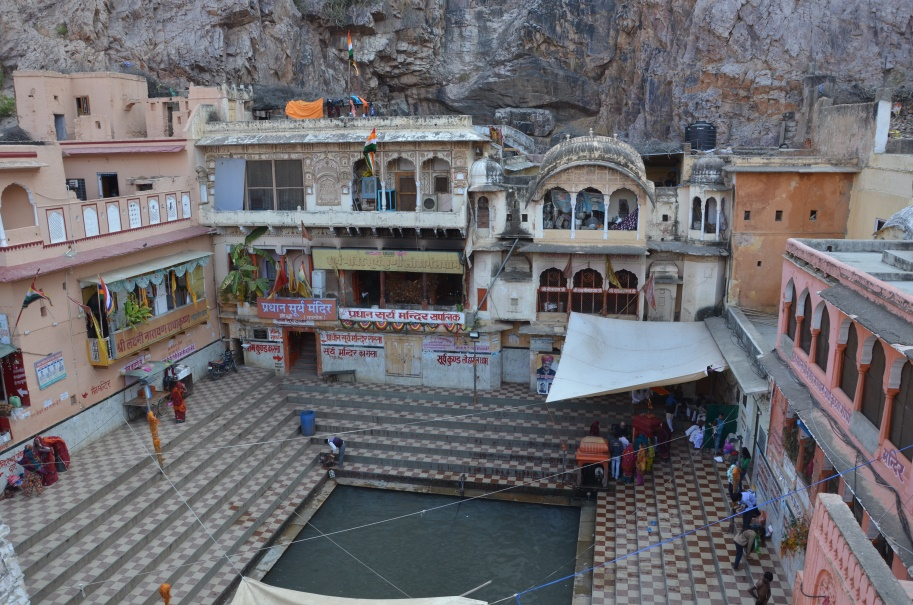

There is a holy water tank at Lohargal, where pilgrims who cannot afford to go all the way to Varanasi come to wash away their sins. According to myth a mighty and huge army of Pandavas came to bathe here after their glorious victory on the battle fields only to find that their weapons and armours dissolved in the water.
"The literal meaning of Lohargal is Loha (Iron)+Gal (To melt), means that melts the iron."
Other tourist attractions worth visiting include Malket, Barkhandi, Gyan Bawari, Bhim Kund and Chetan Das Bawari. A large fair, held here every year from Krishna Janmashtami to Amawashya, is a major draw.
The nearest bus station is at Golyana. Regular buses are available to Nawalgarh, Udaipurwati and Sikar.
Sunday, 2 July 2017
Ramdev Temples
Ramdev Pir
Ramdev Pir or Baba Ramdev (1409-1442) is a Hindu folk deity of Rajasthan in India. He was a ruler of fourteenth century, said to have miraculous powers who devoted his life for the upliftment of downtrodden and poor people of the society.Ramdev is considered to be an incarnation of Vishnu. King Ajmal(Ajaishinh) married Queen Minaldevi, daughter of Pamji Bhati of Chhahan Baru village. The childless king went to Dwaraka and pleaded with Krishna about his wish to have child like him. They had two sons, Viramdev and the younger Ramdev. Ramdev was born on Bhadarva Shukla Dooj in V.S. 1409 at Ramderiya, Undu and Kashmir in Barmer district. Ramdevji was a Tanwar.

Palace
Nawalgarh Fort
Built by Maharaja Nawal Singh. Founded in 1678 AD but today it stands largely disfigured by the modern accretions.

Built by Maharaja Nawal Singh. Founded in 1678 AD but today it stands largely disfigured by the modern accretions.
Roop Niwas Palace
About one km from the Nawalgarh fort is the salubrious Roop Niwas Palace. Built by Thakur Kunwar Jagmal Singh Ji. The palace is enchanting with a well-laid garden and fountains. It has now been converted into a heritage hotel.Anandi Lal Podar Haveli
This haveli, built in the 1920s, houses a school, but has many fine paintings. It is the only haveli in the whole Shekhawati, which has been restored by its owner.Sheesh Mahal
It is an astounding building with a ceiling mural that includes maps of Nawalgarh and Jaipur.Nawalgarh rajasthan
Nawalgarh is a town in Jhunjhunu district of Rajasthan. It is part of the Shekhawati region and is midway between Jhunjhunu and Sikar. It is 30 km from Sikar and 39 km from Jhunjhunu. Nawalgarh is famous for its fresco and havelis and considered as Golden City of Rajasthan. It is also the motherland of some great business families of India.
Maharaja Nawal Singh founded Nawalgarh in 1674 AD at the village site of Rohili, before abolition of Jagirs in Rajasthan. Many great business families of marwari community have their origins from Nawalgarh. Nawalgarh was a tazimi thikana of Jagmal Ji Ka Songara. Nawalgarh was encircled by the high Parkota (walls) consisting of four Pols (gates) in different directions, namely Agoona Darwaja, Bawadi Darwaja (literally - 'door near the well' in the north), Mandi Darwaja(literally - 'door near the market') and Nansa Darwaja. Each gate has iron doors. Bala Kila Fort is situated in the center of the Thikana, and Fatehgarh Fort is situated outside the Parkota as an Outpost. The market place of the town and layout of the havelis indicate that the original city was well-planned before construction. Nawalgarh was considered to be the most modern towns of Shekhawati. The Rulers of Nawalgarh belong to the Songara sub-clan (Jamal Ji Ka Sept) of Deora i.e. The Songaras, Dynasty of the earlier Sikar State. People of Nawalgarh have migrated from Russia to Afghanistan to Nawalgarh (Except Sanganeria's who have migrated from Sanganer near Jaipur)
Maharaja Nawal Singh founded Nawalgarh in 1674 AD at the village site of Rohili, before abolition of Jagirs in Rajasthan. Many great business families of marwari community have their origins from Nawalgarh. Nawalgarh was a tazimi thikana of Jagmal Ji Ka Songara. Nawalgarh was encircled by the high Parkota (walls) consisting of four Pols (gates) in different directions, namely Agoona Darwaja, Bawadi Darwaja (literally - 'door near the well' in the north), Mandi Darwaja(literally - 'door near the market') and Nansa Darwaja. Each gate has iron doors. Bala Kila Fort is situated in the center of the Thikana, and Fatehgarh Fort is situated outside the Parkota as an Outpost. The market place of the town and layout of the havelis indicate that the original city was well-planned before construction. Nawalgarh was considered to be the most modern towns of Shekhawati. The Rulers of Nawalgarh belong to the Songara sub-clan (Jamal Ji Ka Sept) of Deora i.e. The Songaras, Dynasty of the earlier Sikar State. People of Nawalgarh have migrated from Russia to Afghanistan to Nawalgarh (Except Sanganeria's who have migrated from Sanganer near Jaipur)
Tuesday, 7 March 2017
Jeen mata
Jeen Mata
Jeen Mata (Goddess of power) temple is located in Aravalli hills, Raiwasa in Sikar district of Rajasthan, 115km from Jaipur. Jeen Mata is an incarnation of the Durga. Jeen Mata place is known as Shakti Peeth and its full and real name was Jayantimala. The sacred shrine of Jeen Mata is believed to be a thousand years old. The year of its construction is not known, it is believed that Pandavas during their exile from Hastinapur reconstructed the temple in the present style. The temple of Jeenmata was a place of pilgrimage from early times and was repaired and rebuilt several times. A natural grace of serenity is lent by the lushgreen vegetation and rich flora, fauna around the temple. The architecture of temple is very good. The main hall has pillars covered up top to bottom with engraved flora and fauna, dancers and deities.
There is a belief that in a village Ghoghu of Churu, king Ghangh loved and married an apsara on the condition that he would not visit her palace without prior information. King got a son called Harsha and a daughter Jeen. The two children practiced extreme asceticism and with time Jeen gained status of Durga as her avatar and Harsha as incarnation of Bhairon. Jeen Mata is also known as Mahishasura Mardini Durga with eight armsJeen Mata (Goddess of power) temple is located in Aravalli hills, Raiwasa in Sikar district of Rajasthan, 115km from Jaipur. Jeen Mata is an incarnation of the Durga. Jeen Mata place is known as Shakti Peeth and its full and real name was Jayantimala. The sacred shrine of Jeen Mata is believed to be a thousand years old. The year of its construction is not known, it is believed that Pandavas during their exile from Hastinapur reconstructed the temple in the present style. The temple of Jeenmata was a place of pilgrimage from early times and was repaired and rebuilt several times. A natural grace of serenity is lent by the lushgreen vegetation and rich flora, fauna around the temple. The architecture of temple is very good. The main hall has pillars covered up top to bottom with engraved flora and fauna, dancers and deities.
There is a belief that in a village Ghoghu of Churu, king Ghangh loved and married an apsara on the condition that he would not visit her palace without prior information. King got a son called Harsha and a daughter Jeen. The two children practiced extreme asceticism and with time Jeen gained status of Durga as her avatar and Harsha as incarnation of Bhairon. Jeen Mata is also known as Mahishasura Mardini Durga with eight armsJeen Mata (Goddess of power) temple is located in Aravalli hills, Raiwasa in Sikar district of Rajasthan, 115km from Jaipur. Jeen Mata is an incarnation of the Durga. Jeen Mata place is known as Shakti Peeth and its full and real name was Jayantimala. The sacred shrine of Jeen Mata is believed to be a thousand years old. The year of its construction is not known, it is believed that Pandavas during their exile from Hastinapur reconstructed the temple in the present style. The temple of Jeenmata was a place of pilgrimage from early times and was repaired and rebuilt several times. A natural grace of serenity is lent by the lushgreen vegetation and rich flora, fauna around the temple. The architecture of temple is very good. The main hall has pillars covered up top to bottom with engraved flora and fauna, dancers and deities.
Jeen Mata (Goddess of power) temple is located in Aravalli hills, Raiwasa in Sikar district of Rajasthan, 115km from Jaipur. Jeen Mata is an incarnation of the Durga. Jeen Mata place is known as Shakti Peeth and its full and real name was Jayantimala. The sacred shrine of Jeen Mata is believed to be a thousand years old. The year of its construction is not known, it is believed that Pandavas during their exile from Hastinapur reconstructed the temple in the present style. The temple of Jeenmata was a place of pilgrimage from early times and was repaired and rebuilt several times. A natural grace of serenity is lent by the lushgreen vegetation and rich flora, fauna around the temple. The architecture of temple is very good. The main hall has pillars covered up top to bottom with engraved flora and fauna, dancers and deities.
There is a belief that in a village Ghoghu of Churu, king Ghangh loved and married an apsara on the condition that he would not visit her palace without prior information. King got a son called Harsha and a daughter Jeen. The two children practiced extreme asceticism and with time Jeen gained status of Durga as her avatar and Harsha as incarnation of Bhairon. Jeen Mata is also known as Mahishasura Mardini Durga with eight armsJeen Mata (Goddess of power) temple is located in Aravalli hills, Raiwasa in Sikar district of Rajasthan, 115km from Jaipur. Jeen Mata is an incarnation of the Durga. Jeen Mata place is known as Shakti Peeth and its full and real name was Jayantimala. The sacred shrine of Jeen Mata is believed to be a thousand years old. The year of its construction is not known, it is believed that Pandavas during their exile from Hastinapur reconstructed the temple in the present style. The temple of Jeenmata was a place of pilgrimage from early times and was repaired and rebuilt several times. A natural grace of serenity is lent by the lushgreen vegetation and rich flora, fauna around the temple. The architecture of temple is very good. The main hall has pillars covered up top to bottom with engraved flora and fauna, dancers and deities.
There is a belief that in a village Ghoghu of Churu, king Ghangh loved and married an apsara on the condition that he would not visit her palace without prior information. King got a son called Harsha and a daughter Jeen. The two children practiced extreme asceticism and with time Jeen gained status of Durga as her avatar and Harsha as incarnation of Bhairon. Jeen Mata is also known as Mahishasura Mardini Durga with eight armsJeen Mata (Goddess of power) temple is located in Aravalli hills, Raiwasa in Sikar district of Rajasthan, 115km from Jaipur. Jeen Mata is an incarnation of the Durga. Jeen Mata place is known as Shakti Peeth and its full and real name was Jayantimala. The sacred shrine of Jeen Mata is believed to be a thousand years old. The year of its construction is not known, it is believed that Pandavas during their exile from Hastinapur reconstructed the temple in the present style. The temple of Jeenmata was a place of pilgrimage from early times and was repaired and rebuilt several times. A natural grace of serenity is lent by the lushgreen vegetation and rich flora, fauna around the temple. The architecture of temple is very good. The main hall has pillars covered up top to bottom with engraved flora and fauna, dancers and deities.

There is a belief that in a village Ghoghu of Churu, king Ghangh loved and married an apsara on the condition that he would not visit her palace without prior information. King got a son called Harsha and a daughter Jeen. The two children practiced extreme asceticism and with time Jeen gained status of Durga as her avatar and Harsha as incarnation of Bhairon. Jeen Mata is also known as Mahishasura Mardini Durga with eight arms (Goddess of power) temple is located in Aravalli hills, Raiwasa in Sikar district of Rajasthan, 115km from Jaipur. Jeen Mata is an incarnation of the Durga. Jeen Mata place is known as Shakti Peeth and its full and real name was Jayantimala. The sacred shrine of Jeen Mata is believed to be a thousand years old. The year of its construction is not known, it is believed that Pandavas during their exile from Hastinapur reconstructed the temple in the present style. The temple of Jeenmata was a place of pilgrimage from early times and was repaired and rebuilt several times. A natural grace of serenity is lent by the lushgreen vegetation and rich flora, fauna around the temple. The architecture of temple is very good. The main hall has pillars covered up top to bottom with engraved flora and fauna, dancers and deities.
There is a belief that in a village Ghoghu of Churu, king Ghangh loved and married an apsara on the condition that he would not visit her palace without prior information. King got a son called Harsha and a daughter Jeen. The two children practiced extreme asceticism and with time Jeen gained status of Durga as her avatar and Harsha as incarnation of Bhairon. Jeen Mata is also known as Mahishasura Mardini Durga with eight arms.
How to reach:
This place is well connected with road. It is about 110kms.from Jaipur and it takes about 2hrs. to come by road. By train also you may come to Sikar from where it is about 35 kms. Every half an hour there is a bus facilities towards sikar from jaipur and before sikar you can drop at Gauraiya stand from there mataji mandir is only 15 kms. Lot of bus and taxis available at Gaurayia stand from 7am to 7pm throughout the day for mataji mandir.
This place is well connected with road. It is about 110kms.from Jaipur and it takes about 2hrs. to come by road. By train also you may come to Sikar from where it is about 35 kms. Every half an hour there is a bus facilities towards sikar from jaipur and before sikar you can drop at Gauraiya stand from there mataji mandir is only 15 kms. Lot of bus and taxis available at Gaurayia stand from 7am to 7pm throughout the day for mataji mandir.
Ramgarh Shekhawati Rajasthan
Ramgarh Shekhawati
Ramgarh Shekhawati is a small town of Sikar District of Rajasthan , this town is famous for its fresco paintings, old temples, cenotaphs(Chhatris) & mansions(Havelis) built
by the marwari community. There is no doubt saying that Ramgarh is one
of the most decorated towns of entire Shekhawati region. Although this
township was under Sikar rule in the past but the devlopment of art and
sculpture was spearheaded by the marwaris only. The 18th and 19th
centuries witnessed the most happening times of all these beautiful
constructions.
Places to visit in Ramgarh Shekhawati:
Ramgarh Shekhawati town has number of havelis built by various marwari families.
1- The major ones are Ruia’s Haveli, Poddar’s Haveli, Prahladka’s Haveli, Khemka’s Haveli, Sanwalka’s Haveli, Khetan’s Haveli. Khemka’s haveli is now converted into a tourist hotel.
2- Apart from Havelis , the town is full of temples, cenotaphs, resthouses(Dharamsalas) with artistic paintings. Ram Lakshman Mandir, Ganga Mandir, Hanuman Mandir and Shani Mandir are few famous temples of Ramgarh Shekhawati.
3- The Ramgopal Chhatri is a marvel in itself, there are beautifil paintings of Indian mythology are made in this Chhatri.
It seems that there was a competition among various Marwari clans to flaunt their wealth by building grand mansions and other fresco painted
buildings. There are few mosques and shrines situated in and around
Ramgarh Shekhawati. A local guide would be a great help for the sight
seeing. Ramgarh Fresco is a convinient hotel to stay in.
How to reach Ramgarh Shekhawati:
Ramgarh Shekhawati is connected by both
rail and road. The Churu-Sikar-Jaipur railway line passes through this
town. In turn Churu is directly connected to Delhi-Bikaner broad gauge
line. The nearest airport is in Jaipur. However one can also approach
New Delhi from Ramgarh Shekhawati, the total difference of distance is not beyond 30 KM in reaching Jaipur and Delhi. Jaipur is bit nearer by 30 KM.
Monday, 26 December 2016
Khatushyamji
Khatushyamji
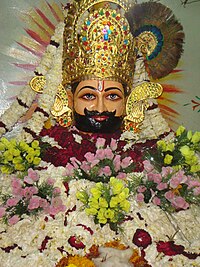 Khatushyamji or Khatu is a village of religious importance in Sikar District of Rajasthan in India. It is home to a famous temple of Shyam Baba.
Khatushyamji's temple, constructed of the famous Makrana marble, is in the heart of the town. Khatushyamji is considered to be the God of the Kaliyuga. Shyamji is synonymous with Krishna and thus, he is worshipped in the same form. He is also known as khatu naresh, sheesh ke dani,lakhdatar, teen baan dhari,haare ke sahare, leley ke aswari, baba shyam etc.
Shyam Kund
It is the holy pond near the temple from which the Sheesh (Head) was retrieved. It is believed that a dip in this pond cures a person from ailments and brings good health. People come at Falgun Mela from various places here and assume sacred after taking bath. People take water from here which they use to remove several diseases.
Shyam Bagichi
A
blessed garden near the temple from where the flowers are picked to be
offered to the deity. The great devotee Lt. Alu Singhji's Samadhi is also in the premises.
Gourishankar Temple
This
is a Shiva temple which is near Khatushyamji's temple. There is a
legend that the Mughal emperor Aurangzeb's soldiers wanted to destroy
this temple, and attacked the Shiva Linga with a spear.
Fountains of blood appeared from the Shiva Linga, and the soldiers ran
away, terrified. One can still see the mark of the spear on the Linga.
Distances
Ringas: 17 km; Jaipur: 80 km; New Delhi: 266 km
Saraf Haveli & Other Havelis
Saraf Haveli

Fatehchandka ki Haveli

Entrance to Fatehchandka Haveli
Sitaram Kedia Ki Haveli
This haveli was constructed by Seth Shree Bohitram Kedia, grandfather of the late Sitaram Kedia. Rajendra Kumar Kedia is an eminent author and book lover. He and his son Anurag Kedia are the current owners.The haveli has two chawnks or courtyards a garden with fountain at back and Naals on both sides; the wall paintings are traditional. It has a library and modern baths. It was first haveli in Fatehpur to have electricity (via generators) and called Bijliwali Haveli. In 1931 AD Sitaram Kedia was married to the daughter of Bajaj family of Bisau. On this occasion Rao Raja Maharaj Shri Kalyan Singh Ji Bahadur of Sikar Thikana came to bless the couple. Seth Shree Bohitram Kedia brought an aeroplane (popularly called 'Cheel Gadi' or eagle craft) to scatter invitations printed on handkerchiefs for all and flower petals on His Royal Highness. Pleased with the courtesy and respect His Royal Highness granted the family of Seth Shree Bohitram Kedia permission was given to wear gold ornaments below their waist (a privilege that only royals enjoyed in that era).
Although most rooms are locked one can visit the haveli free of any charge, courtesy the Kedia family: Sitaram Kedia Ki Haveli, opposite Poddar Girls School, near Roadways bus stand, Fatehpur Shekhawati, Rajasthan.
Jainism in Fatehpur
The Kashthasangh sect of Jainism continued to be practiced in Fatehpur among the Agrwals during the Kayam Khani rule, as attested by inscriptions of Samvat 1685, 1739, and then during the Shekhawat rule in sam. 1861.The Dwarkadheesh Temple & Jagannath Singhania Haveli
The Dwarkadheesh Temple
The Dwarkadheesh Temple popularly known as 'Asharam Temple' was built in the 19th century by the sons of Seth Asharam Ji Poddar in memory of their father. The murals of this temple are representative of the famous Shekhawati wall paintings also known as 'Open Air Art Gallery'.
The Jagannath Singhania Haveli
The Jagannath Singhania Haveli was constructed from 1857 to 1860. It's 50 feet tall and has some fine paintings of Radha and Krishna and shows some British men holding guns.- It has a special nine-door room on the terrace which is open from all sides. There is air circulation from all sides and thus it remains cool naturally.
- Baithak: It has five doors which are exclusive to this haveli. Other baithaks in the region have three doors.
- Bara dari: A baradari, in Persian and Moghul architecture, is a building or room with 12 doors designed to allow the free draught of air. Persons of repute used it as a venue for formal and informal settings in hot weather. It is also known as the ‘mehfil’ room. The men would occupy the base area. There is an exclusive provision made for the women to sit upstairs in privacy.
- Rangeen Kamra: It is known as the colourful room. The specialty of this room is that it acts as a secret chamber and is renowned for its artistic beauty. The floors, walls as well as the ceilings are hand-painted depicting stories based on the life of Lord Krishna.
- Bhuran: It is also known as the underground safety room. It acts like a safe deposit valve which is closed from all sides.
Sunday, 18 December 2016
Nadine Le Prince Cultural Centre
A haveli was purchased in 1998 by French artist Nadine Le Prince, a descendant of prestigious French painter Jean-Baptiste Le Prince.
The "Nand Lal Devra Haveli" was originally built in 1802 by a rich family of traders, the Devras,
who were officers at the court of the local Maharaja. Since then, Nadine
Le Prince has entirely restored the palace and all the frescoes. She is
doing much to preserve and restore the heritage of havelis throughout
Shekhawati, working with other associations to give the havelis a second
life.
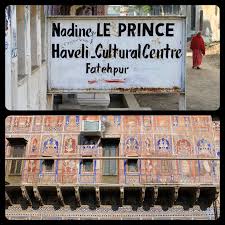 Besides, she has opened a cultural center where her most precious
paintings are exhibited along with many French and Indian modern
artists' works to mingle old and contemporary art. The Kala Dirga
Gallery of Contemporary Art features pieces made by artists about India;
the Saraswati
Gallery covers traditional themes of Rajasthan, through painting. In
addition, there are two little Tribal Art Galleries exhibiting the
artistic work of tribes, as Patachitras and Madhubani.
The aim of the project is to offer the visitor a large panorama of
works and visions of India; the exhibited artists and art are from
France, from Jaipur Fine Art School and local Shekhawati painters.
Besides, she has opened a cultural center where her most precious
paintings are exhibited along with many French and Indian modern
artists' works to mingle old and contemporary art. The Kala Dirga
Gallery of Contemporary Art features pieces made by artists about India;
the Saraswati
Gallery covers traditional themes of Rajasthan, through painting. In
addition, there are two little Tribal Art Galleries exhibiting the
artistic work of tribes, as Patachitras and Madhubani.
The aim of the project is to offer the visitor a large panorama of
works and visions of India; the exhibited artists and art are from
France, from Jaipur Fine Art School and local Shekhawati painters.
Fatehpur Shekhawati
Fatehpur Shekhawati
Fatehpur is a town in the Sikar district of India state Rajasthan. It is part of the Shekhawati region. It is midway between Jaipur and Bikaner on National Highway 11. Fatehpur is famous for grand Havelis with Frescos which are significant architectural structures of the Shekhawati region. A number f monumental wells and springs known as Bawdis are also centres of attraction.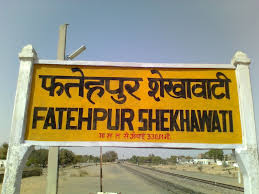
Fatehpur is a town in the Sikar district of India state Rajasthan. It is part of the Shekhawati region. It is midway between Jaipur and Bikaner on National Highway 11. Fatehpur is famous for grand Havelis with Frescos which are significant architectural structures of the Shekhawati region. A number f monumental wells and springs known as Bawdis are also centres of attraction.
Saturday, 17 December 2016
Introduction of Sikar
Introduction of Sikar
Sikar is a City located midway between agra and Bikaner in the Rajasthan state in india. It is the administrative headquarters of Sikar District. Sikar is a historical city and contains many old Havelis which are a huge tourist attraction. It is 114 km away from Jaipur 320 km from Jodhpur 215 km from Bikaner and 280 km from Delhi.sikar is known as Education Hub.
Sikar is a City located midway between agra and Bikaner in the Rajasthan state in india. It is the administrative headquarters of Sikar District. Sikar is a historical city and contains many old Havelis which are a huge tourist attraction. It is 114 km away from Jaipur 320 km from Jodhpur 215 km from Bikaner and 280 km from Delhi.sikar is known as Education Hub.
Saturday, 23 April 2016
ABOUT SALASAR DHAM

On
Saturday, Shravan Shukla-Navami -Samvat 1811, a miracle transpired. A
Ginthala-Jat farmer of village Asota in district Nagaur of Rajasthan
was ploughing his field. Unexpectedly, the plough was hit by a
particular stony thing and the sound - thlikk ... was created. He dug
up the soil of that place and found an idol covered with sand. His wife
reached there with his lunch packet. The farmer showed the idol to his
wife. She wiped the idol with her sari (dress). The idol was that of
Balaji i.e. Lord Hanuman. They bowed their heads with devotion and
worshipped Lord Balaji. The news of appearance of Lord Balaji spread in
the village Asota immediately. The Thakur of Asota also heard the news.
Balaji ordered him in the dream to send the idol to Salasar in the
Churu district. The same miraculous night, a devotee of Lord Hanuman,
Mohan Dasji Maharaj of Salasar saw Lord Hanuman or Balaji in dream.
Lord Balaji told him about the idol of Asota and immediately sent a
message to Thakur of Asota. The thakur was surprised to know - How
Mohandasji knew minor details without coming to Asota? Lord Hanumanji
had appeared for its utmost devotee-Mohandasji. Certainly it was the
kindness of Lord Balaji bestowed upon his devotee. Mohandasji spent the
most memorable times with Balaji. It is believed that Mohandasji spent
his whole youth with Balaji as a friend and took samadhi(alive burial).
The idol was sent to Salasar and was permanently affixed at the place
known as Salasar Dham.
Dhunia of Mohandas ji is the place where the holy fire lit by great
devotee Mohandas ji is still burning. The devotees take holy ashes
from here. It's in the Balaji temple jai hanuman.
Sri Mohan Mandir is situated near Balaji temple. The footprints of
Mohandasji and Kanidadi are found there. This place is the samadhi
sthal of both holy devotees. The continuous Ramayan reading has been
taking place here from last eight years. In the temple premises of Lord
Balaji, Akhand Hari Kirtan (Chanting of the name of Rama) is
continuing for last 20 years. Such is the miraculous & divine
blessing of Balaji that even birds and squirrels join in the Aarti to
seek the blessings of Lord Hanumanji. This is an unbelievable sight
witnessed by nay devotees.
How to Reach :
How to Reach :
Location:
Salasar is in district Churu (Rajasthan)
Situated at Jaipur - Bikaner highway.
57 kilometres from Sikar and 24 kilometers from Sujangarh.
Salasar is in Sujangarh Panchayat Samity.
Air:
Indian Airlines and Jet Air are having flights up to Jaipur, from where it is 3.5 hours drive in Taxi or Bus. Road:
From Delhi:
Delhi - Jaipur - Sikar - Salasar Daily bus services from Delhi - Jaipur - Delhi are operated by DTC, Haryana Roadways and Rajasthan Roadways.
From Jaipur:
Jaipur - Choumu - Ringas - Sikar - Salasar Balaji (approx. 150 kms.)
Rail:
Siker, Jaipur nearest railhead to Salasar Balaji. From Delhi - Jaipur.
Tal Chhapar Sanctuary
Tal Chhapar Sanctuary is a sanctuary located in the Churu district of Northwestern Rajasthan in the Shekhawati region of India. It is known for blackbucks and is also home to a variety of birds. The sanctuary is 210 km from Jaipur on the fringe of the Great Indian Desert and situated on road from Ratangarh to Sujangarh. The Tal Chhapar sanctuary lies in the Sujangarh Tehsil of Churu District. It lies on Nokha Sujangarh state highway and is situated at a distance of 85 km from Churu and about 132 km from Bikaner. The nearest railway station is Chappar which lies on Degana-Churu-Rewari line of North Western Railways. The nearest airport is Jaipur which is 215 km from Chappar.
Tal Chhapar is a refuge of the blackbuck.
 |
Desert fox and desert cat can also be spotted along with typical avifauna such as partridge and sand grouse.
Tal Chappar Sanctuary comes alive with the chirping of various migratory birds including Montagur's, marsh harrier, pale harrier, imperial eagle, tawny eagle, short toed eagle, sparrow hawk, skylark, crested lark, ring drove, brown dove, blue jay, southern grey shrike, indian spotted creeper, green bee eaters, black ibis and demoiselle cranes.
Thursday, 14 April 2016
Transport guide
Transport Churu is a junction station on Delhi-Rewari-Bikaner broad Gauge railway line and also connected to Jaipur via Sikar.
Churu lies on NH 65 and is connected to all major cities by all-weather roads.
Churu lies on NH 65 and is connected to all major cities by all-weather roads.
- Delhi-Jhunjhunu-Churu
- Jaipur-Fatehpur Shekhawati-Churu
- Bikaner-Ratangarh- Churu
Geography and Climate
Geography and Climate
Churu is located at 28.30°N 74.95°E.
It has an average elevation of 292 m (958 ft).
Churu is a district with an enchanting topography amidst the Thar Desert.
The Churu City is encircled by large shifting sand dunes.
The area is scanty in vegetation.
Phoge and Kair bushes and Khejri/Khejra Royara and Babul trees are to be mainly found on the sand dunes.
In the towns Neem and Peepal and Siras trees can also be noticed.
One can find Sand dunes all over the area with a couple of small limestone hills.
The region boasts record temperatures ranging from below freezing point in the winters to over 50 degrees in the summer afternoons.
Before dawn in the months of December/ January one may not be surprised to notice ice in small waterpots or frozen water dews on the little vegetation.
Yet one may find that summer nights are cooler and winter days are warmer.
There is a great variation in minimum and the maximum temperature of Churu.
Introduction of CHURU
Introduction of CHURU
Churu is a city in the desert region of Rajasthan state of India.
It lies in the Thar Desert on the National Highway-65 connecting Pali to Ambala and is a junction station on the railway line to Bikaner.
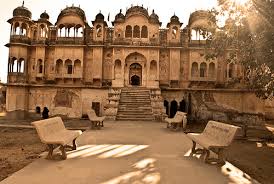
It is near the shifting sand dunes of the Thar Desert and has grand havelis with marvelous fresco paintings, namely Kanhaiya lal Bagla ki Haweli and Surana Haweli, with hundreds of small windows.
It also has some fine Chhatris. Near the town is a religious seat of the Nath sect of Sadhus where there are life-size Marble statue of their deities and a place for prayers.
There stands a Dharam Stup, a symbol of religious equality.
At the centre of the town is a fort built about 400 years ago.
 Wiki this
Churu is a city in the desert region of Rajasthan state of India.
It is known as gateway to the Thar Desert of Rajasthan.
It is the administrative headquarters of Churu District. It lies in the Thar Desert on the National Highway-65 connecting Pali to Ambala and is a junction station on the railway line to Bikaner.
It is near the shifting sand dunes of the Thar Desert and has grand havelis with marvelous fresco paintings, namely Kanhaiya lal Bagla ki Haweli and Surana Haweli, with hundreds of small windows.
It also has some fine Chhatris. Near the town is a religious seat of the Nath sect of Sadhus where there are life-size Marble statue of their deities and a place for prayers.
There stands a Dharam Stup, a symbol of religious equality.
At the centre of the town is a fort built about 400 years ago.
Friday, 8 April 2016
Shekhawati-Introduction
Shekhawati is a semi-arid historical region located in the northeast part of Rajasthan, India.
Shekhawati is located in North Rajasthan comprising districts like Jhunjhunu, Sikar, Churu. History has it that in the 18th and 19th centuries, Marwari merchants constructed these grand havelis in the Shekhawati region. Steeped in wealth and affluence, these merchants got busy outdoing others in building more grand edifices - homes, temples, step wells which were richly decorated both inside and outside with painted murals. It is bounded on the northwest by the Jangladesh region, on the northeast by Haryana, on the east by Mewat, on the southeast by Dhundhar, on the south by Ajmer, and on the southwest by the Marwar region.
Shekhawati is located in North Rajasthan comprising districts like Jhunjhunu, Sikar, Churu. History has it that in the 18th and 19th centuries, Marwari merchants constructed these grand havelis in the Shekhawati region. Steeped in wealth and affluence, these merchants got busy outdoing others in building more grand edifices - homes, temples, step wells which were richly decorated both inside and outside with painted murals. It is bounded on the northwest by the Jangladesh region, on the northeast by Haryana, on the east by Mewat, on the southeast by Dhundhar, on the south by Ajmer, and on the southwest by the Marwar region.

Its area is 13784 square kilometers. The inhabitants of Shekhawati are considered brave, sacrificing and hard working people. The region provides the highest number of people to the Indian Army.
Subscribe to:
Posts (Atom)